IAMM’s SIG on Music Therapy and Displaced Persons
In September 2024, the first conference meeting of the Special Interest Group (SIG) Music Therapy and Displaced Persons took place. Dr Liz Coombes (myself) and Samuel Gracida were able to attend in person, with Hala Hamdan and Sarah Helander joining online. Our fifth member, Emma Maclean, wasn’t able to join, but was with us in spirit.
The meeting took the form of us sharing our work with those present, and discussing various aspects of music therapy and other creative therapies such as dance movement therapy. We linked these to themes that we had experienced in working with this client group. Trauma and the idea of brave spaces where difficult and challenging feelings may be shared remain in my memory, and provide food for thought as we build on this event.
My own part of the meeting focused on the varying work I have undertaken since around 2009, when I developed an interactive therapeutic music-making programme in Palestine. Teachers and health care workers were supported in developing skills in running groups for young children. This has developed over the years into my setting up clinical music therapy groups in the UK for mothers and pre-school children, exploring how the effects of displacement and trauma may be mitigated by music therapy.
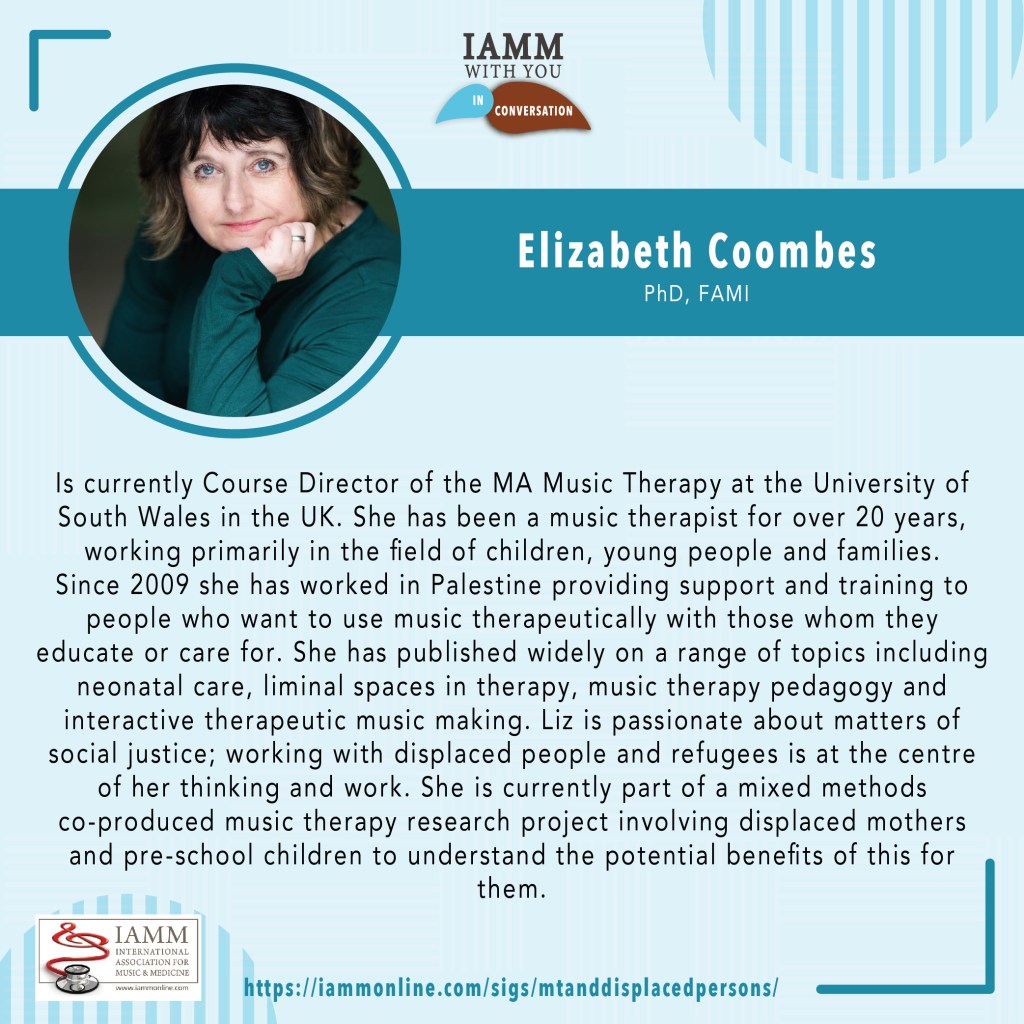
Samuel Gracida
My contribution to the meeting focused on my involvement with the ‘Bridges’ project in Heidelberg, Germany, which I have been part of since 2022. Bridges supports refugee children, teenagers, and young adults aged 5 to 28 through a variety of music-related activities, fostering a sense of community and empowerment. Initially, I joined as an observer in 2019, but over the past year, my role has evolved significantly. I now spend several hours each week directly engaging with the children, helping them develop musical skills and witnessing their growth firsthand.
In our weekly open music sessions, singing classes, and band workshops, I’ve seen children who were initially uninterested in learning music become dedicated instrumentalists. Some have gone on to master multiple instruments, while others, even at a young age, have picked up songs in record time. Despite the challenges, such as fluctuating attendance, communication hurdles, and the intense energy of working with young people, there is a clear impact: music is a powerful tool for resilience and connection.
Through my work with Bridges, I’ve also gained valuable insight into global projects supporting refugees and have co-edited a book on Music Therapy and Displaced Persons with Dr. Elizabeth Coombes and Emma Maclean. This work has strengthened my understanding of childhood resilience, particularly through the lens of Dr. Kenneth Dinsburg’s seven thematic areas of resilience, such as competence, connection, and coping.
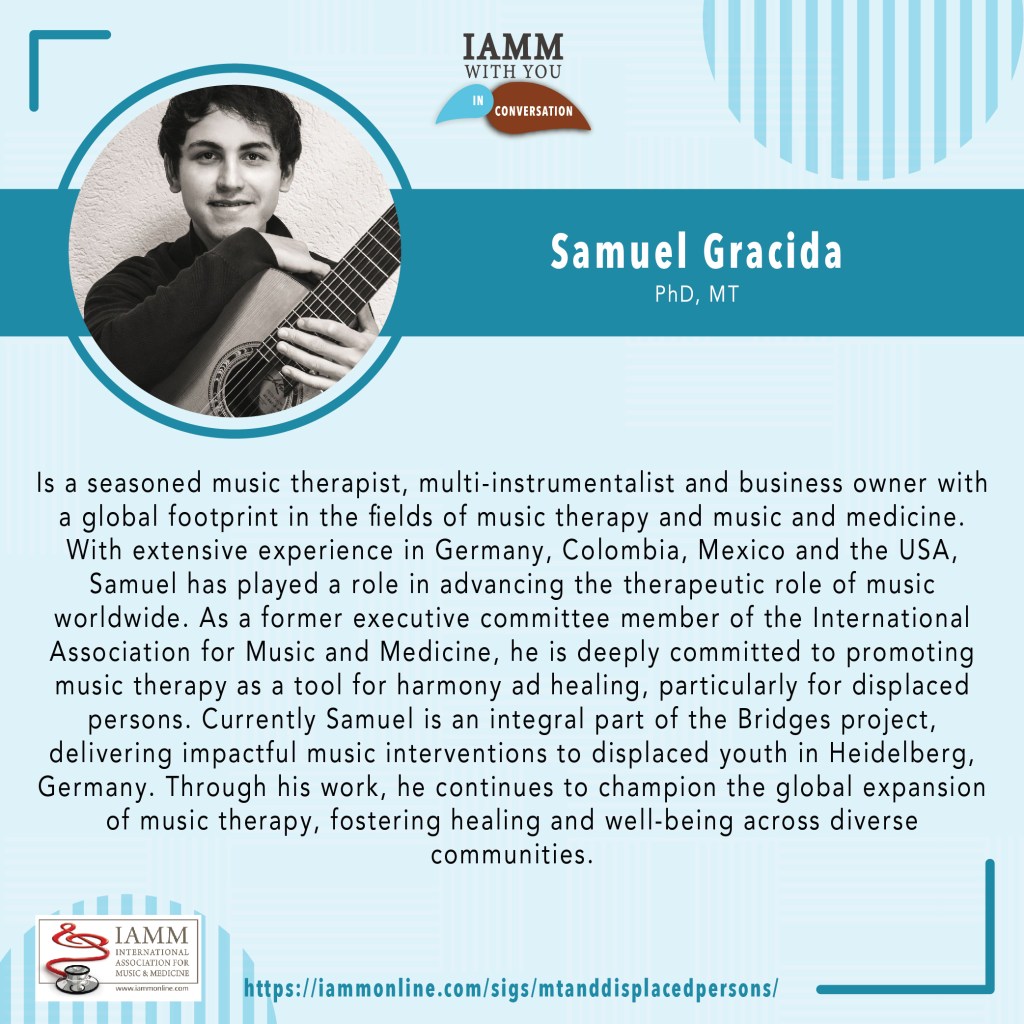
Hala Hamdan
My presentation, entitled So close, So far, explores the transformative role of music therapy in pediatric oncology, particularly for displaced children from conflict zones. Drawing from my five years of experience as a Palestinian music therapist working in an Israeli hospital, I examine the case of a three-year-old cancer patient from Gaza who, despite being far from home, found solace in the therapeutic relationship we developed. This experience highlights the dual reality I navigated—both as a Palestinian professional within Israeli healthcare and as a dedicated music therapist supporting vulnerable children.
For international music therapists working with displaced populations, this topic holds broad relevance. Whether in refugee camps, war zones, or hospitals treating displaced patients, music therapists worldwide face similar challenges—helping children cope with trauma, medical stress, and separation from home. Music therapy transcends language and cultural barriers, providing comfort and stability where traditional support systems are absent.
This presentation underscores the importance of cultural sensitivity, trust-building, and creative adaptability in cross-cultural therapeutic settings. It offers insights into trauma-informed care and emphasizes how musical connection fosters a sense of belonging, even in isolation. By sharing this experience, I contribute to a global dialogue on music therapy’s power to heal, connect, and transform lives.
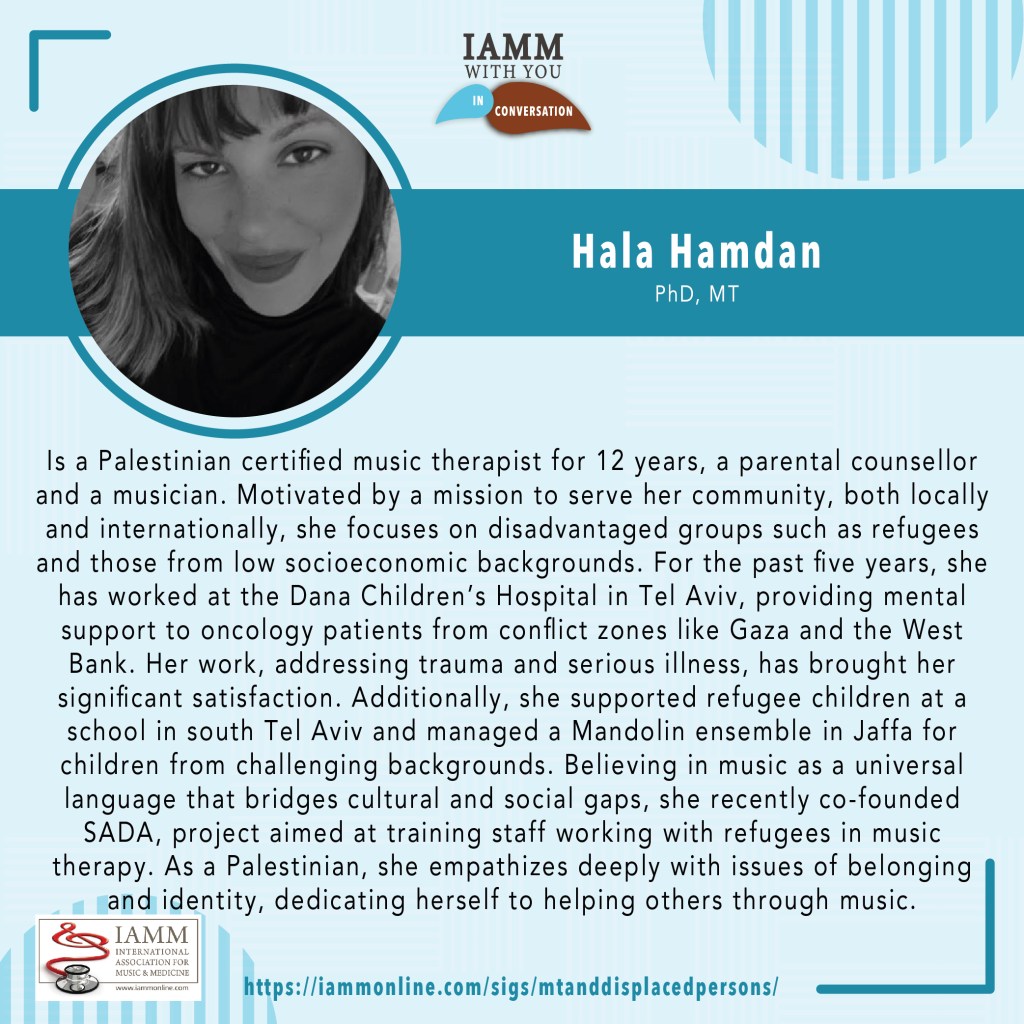
Sarah Helander
My part of the presentation focused on community-based mental health and psychosocial support (CB MHPSS) projects in refugee camps in Greece. This approach emphasizes psychosocial well-being from a relational and holistic perspective, recognizing that displacement affects not only individuals but entire communities.
Central to the community-based model is active participation, meaning support is provided not just for the community, but with them. The projects I’m involved in focus on creating, restoring, and strengthening a sense of safety, purpose, and belonging through music, movement, and art, both in individual and group settings. A father taking part in one of the projects expressed that “music brings balance to our lives and helps us escape from everyday difficulties. Music makes me feel strong inside, and I want to share this feeling with my children.”
The second part of the presentation highlighted the importance of supporting frontline staff. Part of my work is offering debriefing and reflective sessions to help staff navigate the emotional challenges of their work, manage work/life balance, and assist them during transitions, particularly when adjusting back to their lives after returning home. In this way, fostering safety and connection is essential not only for those receiving support but also for those providing it.

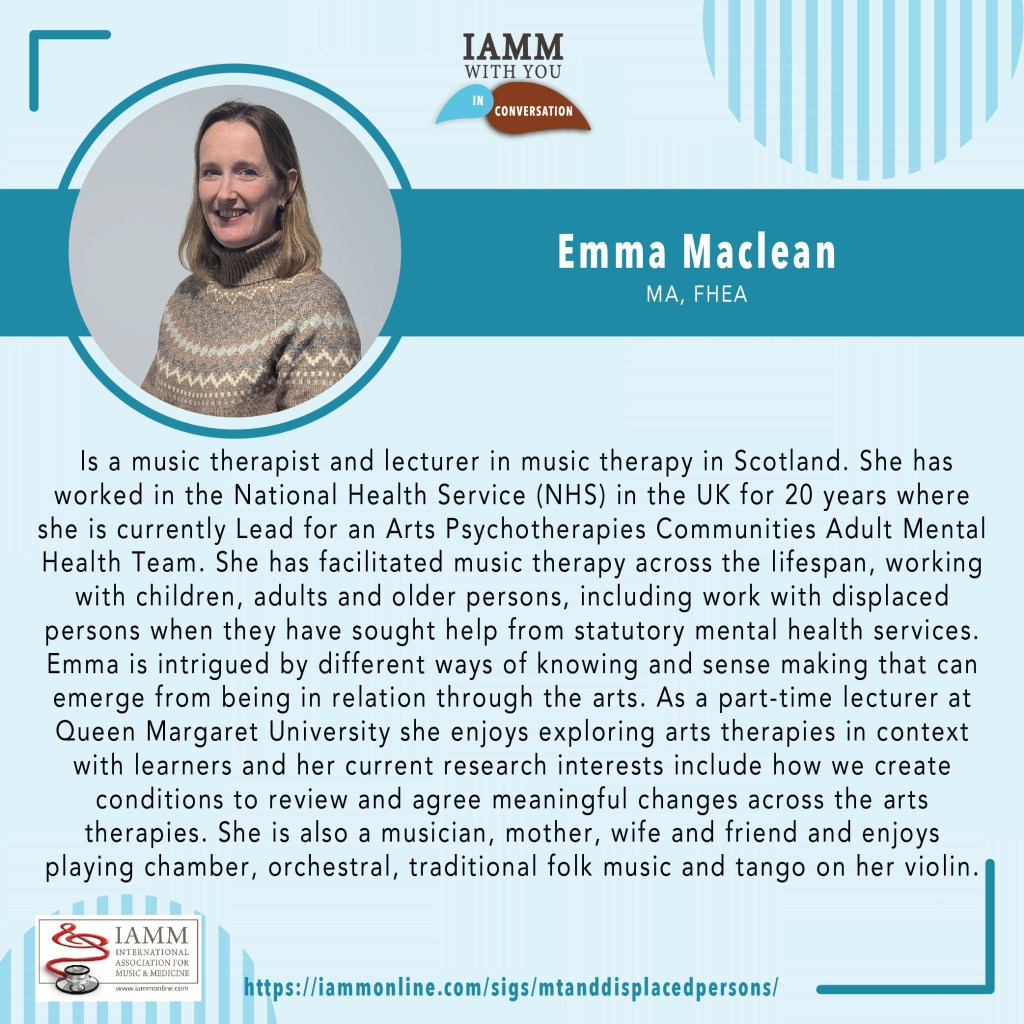
Emma Maclean
Whilst I wasn’t able to be present at the first conference meeting, I have always been alongside my colleagues in spirit, participating firstly in the planning pre-conference and in the ongoing work post-conference.
Reflecting on the roles of music and music therapy feels like an important endeavour in our ongoing work with displaced persons. In a recent critical overview of the literature, it became clear that therapists and musicians are trained in a diversity of musical and theoretical frameworks. The training that we have undertaken, our own cultural experiences, and our values all underpin our ways of working with persons who have experienced forced displacements. In making music together, we attempt to connect with another person in different ways that often link with a range of implicit and explicit goals.
It is my hope that within the Special Interest Group we will be able to take time to connect with one another, to bend the beam back on ourselves, and get closer to what, why, and how music and music therapy can help those who have experienced forced displacements. Through making connections amongst practitioners and participants, I hope that we can maintain curiosity and co-create opportunities to continuously strengthen and refine practices.


0 Comments