Music and Medicine Vol 18, No 3: Editorial Feature and Table of Contents
Table of Contents
Editorial
Shared Scholarship, Shared Responsibility: Reflections on Reference Integrity and New Research in Music and Medicine
Amy Clements-Cortés, Ralph Spintge
Full Length Articles
Case study evaluation of live music-assisted reminiscence therapy group for mild cognitive impairment and mild dementia among Chinese Malaysians
Yong Jia Lim, Justine Jian Ai Thong, Shu Yi Chung, Zi Bin Teoh, Xin Yi Lee, Yoong Yiin Choy, Alwin Ru Kiet Wong, Shean Yih Soh, Jane Tze Yn Lim, Norfazilah Ahmad, Donald Hong Huang Yeo, Kah Hui Yap
Evaluating Use of Music Therapy to Address Anxiety and Self-Efficacy for Women Undergoing Fertility Treatments
Alison E. Short, Natasha Andreadis, Geena Cheung
Effects of music therapy on patients with psychotic disorders. A systematic review
Raúl Pérez Núñez, Verónica Pons León, Sara Herrero Gozalo, Ines María Monreal-Guerrero
Familiar music modulates cortical oscillatory activity after severe stroke: an EEG case series
Ana Luiza de Lima Afonso, Hugo Henrique Pratis de Oliveira, Pedro Henrique Sousa de Andrade, Adriano Oliveira de Andrade, Ariana Moura Cabral, Gustavo José Luvizutto, Luciane Aparecida Pascucci Sande de Souza
Music as a biological signal of safety: A polyvagal perspective on compassionate musician–patient interaction in healthcare
Peter Shannon, Stephen W. Porges
Feature: Music as a biological signal of safety: A polyvagal perspective on compassionate musician–patient interaction in healthcare
Peter Shannon, Stephen W. Porges
Abstract
Healthcare environments present significant environmental and psychological stressors that can trigger a patient’s autonomic threat-detection systems, resulting in sustained sympathetic arousal that impairs recovery and emotional regulation. While live music is widely recognized as a comforting intervention in clinical settings, it is often framed merely as subjective entertainment, obscuring the neurophysiological mechanisms through which musical encounters may influence patient regulation. This perspective paper establishes a theoretical framework combining compassion science and Polyvagal Theory (PVT) to explain how live musical encounters may function as potent cues of environmental safety capable of supporting autonomic regulation and co-regulation. By examining the training curriculum of the American Institute for Music and Healing (AIMH) ‘Awakening the Inner Gift’ program, we illustrate how live musician–patient interactions may function as stabilizing regulatory processes within healthcare environments. These encounters demonstrate patterns consistent with Polyvagal Theory that are interpreted through anecdotal observations from patients and musicians. To ground this theoretical framework in clinical reality, we present anecdotal narrative feedback from 18 patients and performing musicians in an outpatient cancer center. These brief clinical observations demonstrate experiential themes of emotional regulation, autobiographical memory activation, and relational reciprocity. Ultimately, This paper suggests that a foundational understanding of Polyvagal Theory should form part of the education of music-in-health practitioners, equipping musicians with a neurophysiological framework for understanding how compassionate musical interactions may support autonomic regulation and patient wellbeing.

Peter Shannon, PhD, is an international professional orchestral conductor and health humanities scholar whose work integrates artistic excellence with clinical innovation. As the Founder and Director of the American Institute for Music and Healing (AIMH), he draws on over 15 years of experience shepherding music programs in hospitals, cancer centers, and hospices.
Simultaneously, in collaboration with Dr. Jacqueline Huntly, MD, MPH, he has developed music as a modality to explore self-leadership and self-care for healthcare professionals. Grounded in mind-body medicine and with a deep interest in compassion science, his work is focused on researching music as a multimodal vehicle for connection, compassion, and wellbeing. Dr. Shannon holds a PhD in Musicology and Health Humanities and is an Adjunct Professor of Bioethics and Medical Humanities at Mercer University School of Medicine. Previously a Visiting Instructor at CCARE at Stanford University, he is currently a Visiting Scholar at the Benson-Henry Institute for Mind Body Medicine at Massachusetts General Hospital.
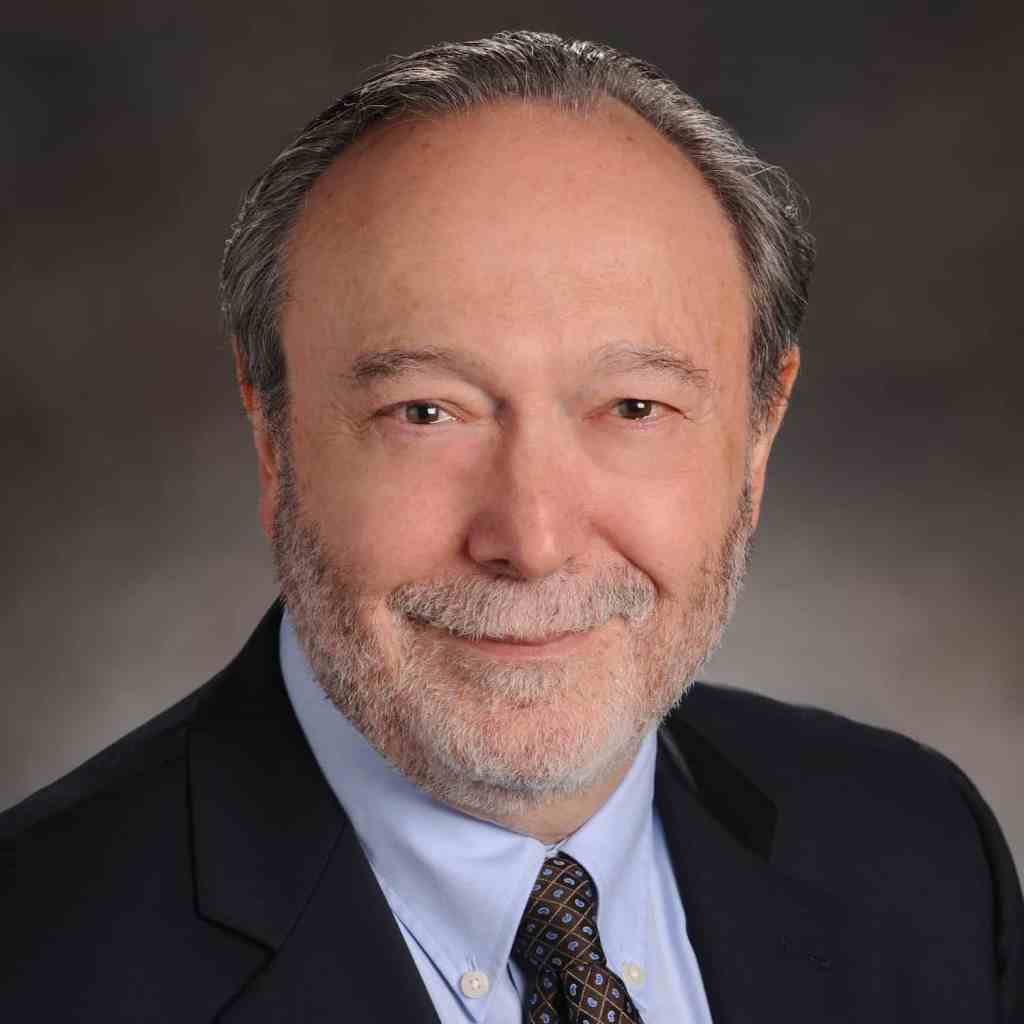
Dr. Stephen W. Porges is an acclaimed American neuroscientist and psychologist best known for developing the Polyvagal Theory in 1994. His work bridges behavioral neuroscience, evolutionary biology, and psychology to map how the autonomic nervous system regulates emotional states, trauma responses, and social behaviors. He serves as a Distinguished University Scientist at Indiana University Bloomington, where he directs the Traumatic Stress Research Initiative.
Interview with Dr. Peter Shannon
- Can you provide an overview of the article and the topics it explores?
This article explores what may be happening biologically when live musicians perform for patients receiving chemotherapy. There is already substantial evidence that music can reduce anxiety, lessen pain, improve the patient experience, and contribute to better health outcomes. Rather than revisiting that evidence, we explore how observations from a live music program in an outpatient cancer center can be interpreted through the lens of Stephen Porges’ Polyvagal Theory.
Drawing on patient and musician experiences, we examine whether themes such as comfort, hope, autobiographical memory, gratitude, and interpersonal connection reflect processes described by Polyvagal Theory. The paper shifts the focus from music as an isolated acoustic stimulus to the musician–patient encounter itself, exploring how the relationship between performer and patient may support emotional regulation, social connection, and wellbeing.
Ultimately, we hope the paper encourages a broader conversation about the role of live music in healthcare and suggests that Polyvagal Theory offers a valuable perspective for understanding the biological and relational dimensions of these encounters.
2. What inspired you to undertake this particular study?
This paper really began with my own experiences as a professional orchestral conductor. While serving as Music Director of the Savannah Philharmonic and The Jackson Symphony (Tennessee), I established programs that brought professional orchestral musicians into hospitals and cancer centres. Over many years, I repeatedly witnessed moments that suggested something far deeper than a musical performance was taking place.
Patients spoke of hope, encouragement, peace, and deeply personal memories that seemed to emerge almost spontaneously. Equally striking was the effect on the musicians themselves, many of whom described leaving the hospital profoundly affected by the encounter. Those experiences led me to establish the American Institute for Music and Healing (AIMH) and sparked a deep interest in compassion science, psychoneuroimmunology, and the neurophysiology of human connection.
It was through that journey that I encountered Stephen Porges’ Polyvagal Theory, which offered a compelling perspective through which to interpret many of the experiences I had been observing for years. Working with Steve on this paper has been a genuine privilege. His generosity with his time, his encouragement, and his willingness to engage with ideas emerging from my work with professional musicians in healthcare have been invaluable throughout this project.
3. What future research or areas of exploration would benefit the field and application of what was discussed in this article?
I think one of the most exciting opportunities is to move beyond demonstrating that music improves health outcomes and begin investigating the biological mechanisms that may underlie those effects. In particular, it would be valuable to better understand how live musical encounters influence autonomic regulation and which elements of the interaction are most important. Beyond the music itself, factors such as compassionate presence, interpersonal engagement, and the relationship between musician and patient may all contribute to the regulatory effects observed in healthcare settings.
I also believe there is an important opportunity to strengthen the education of professional musicians working in healthcare settings outside the music therapy profession. Music therapists receive extensive specialist clinical training, and their contribution to healthcare is well established. Alongside this, however, there is a growing international community of professional musicians whose role is not to provide music therapy but to bring live music into hospitals and other clinical environments. Providing these musicians with a foundational understanding of compassion science, psychoneuroimmunology, and current mind-body research findings may help them better understand the biological mechanisms that may be engaged during musical encounters and enable them to approach this work with greater awareness and intentionality.
4. How do you think this article impacts the current understanding of music and medicine?
I hope it contributes another perspective rather than replacing existing ones. The fields of music therapy, arts in health, psychology, neuroscience, and medicine have already generated an impressive body of research demonstrating the benefits of music.
What this paper attempts to add is a theoretical framework that helps explain why live musical encounters may be particularly powerful. Polyvagal Theory offers a language for understanding concepts such as safety, co-regulation, neuroception, and prosody, while compassion science helps explain why caring human relationships have measurable biological consequences.
Ultimately, I hope the paper encourages greater dialogue between musicians, neuroscientists, clinicians, and compassion researchers. Some of the most important advances in healthcare occur when disciplines begin speaking to one another, and I am passionate in my belief that music has an important place within that conversation.
5. In your opinion, what are the most significant implications of your findings for the field and its integration into healthcare practices?
Perhaps the most significant implication is that we begin to think about music in healthcare less as an isolated intervention and more as a relational human experience. Much of the research to date has focused, quite appropriately, on measuring the effects of music. Our paper suggests that it may be equally important to understand the biological and interpersonal processes through which those effects emerge.
As a conductor, this resonates deeply with my own life’s work. My entire career has been grounded in score analysis—structure, harmony, and all the other endless intricacies of music. However, I view this technical mastery not as an end in itself, but as the essential foundation for a much larger, holistic phenomenon. In the concert hall, the true power of a conductor lies in using music to build a living network of connection—first directly with the orchestral players, but also between the musicians themselves, and ultimately, harnessing that deep sense of trust to connect with the audience.
Being the custodian of this collective alignment as a conductor has revealed to me in, so many ways, that music has an extraordinary capacity to bridge gaps, create shared emotional experiences, and foster a deep sense of belonging. These exact real-world observations in the concert hall and in the cancer center, are what led me to explore compassion science, psychoneuroimmunology, and Polyvagal Theory. Rather than diminishing the alchemy of music, these scientific fields provide a framework for understanding why music operates as such a profound medium for human connection.
By combining precise musical artistry with this deeper understanding of the mind–body connection, live music can be thoughtfully integrated into the healthcare landscape as an active, supportive resource with real results.
Looking forward, this points to a clear opportunity to develop music within the health humanities in a convincing way that expands on these deeper dimensions. For example, I am currently exploring how music can be actively harnessed as an experiential (rather than didactic) modality to support healthcare workers themselves—fostering professional self-leadership, presence, and emotional regulation, while fundamentally cultivating a healthier, more resilient culture of care.

0 Comments